Our website uses cookies to manage some features and to show you news and announces in selected language. By clicking on OK button, you accept the use of cookies.



Group of
Precision Quantum Measurements
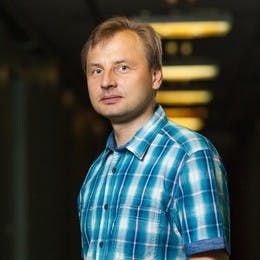
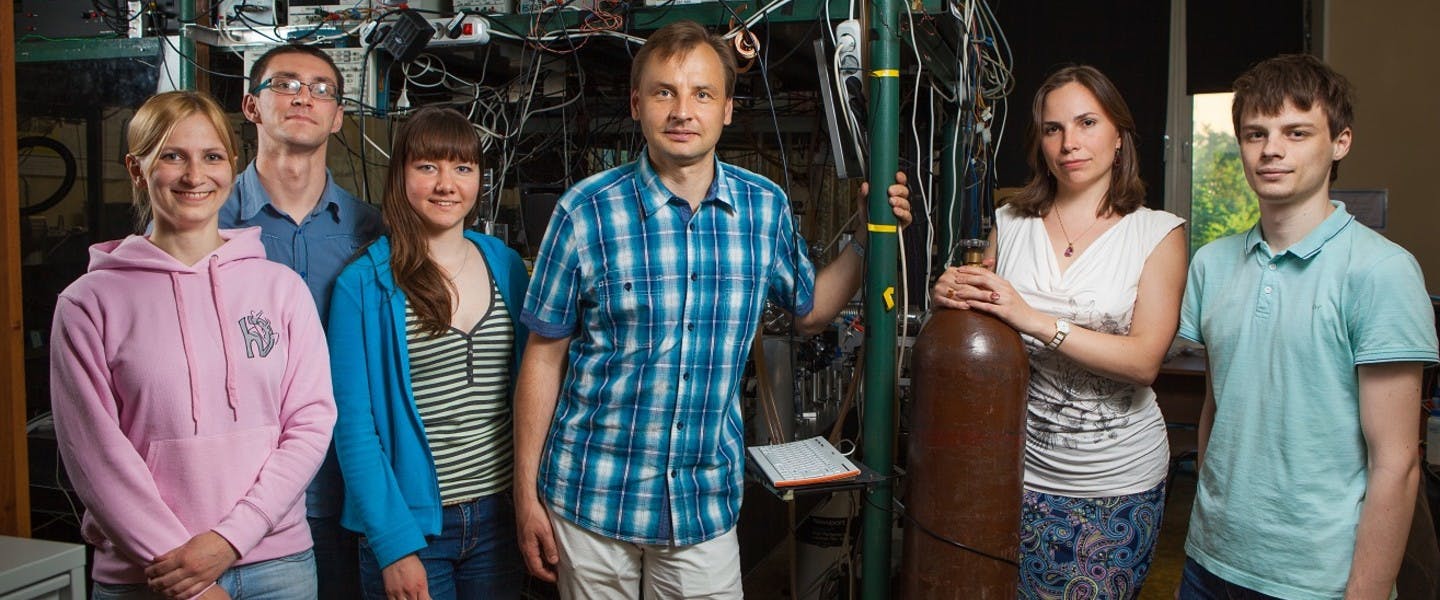
Nikolay Kolachevsky
Principal investigator
Group publications

About the Group
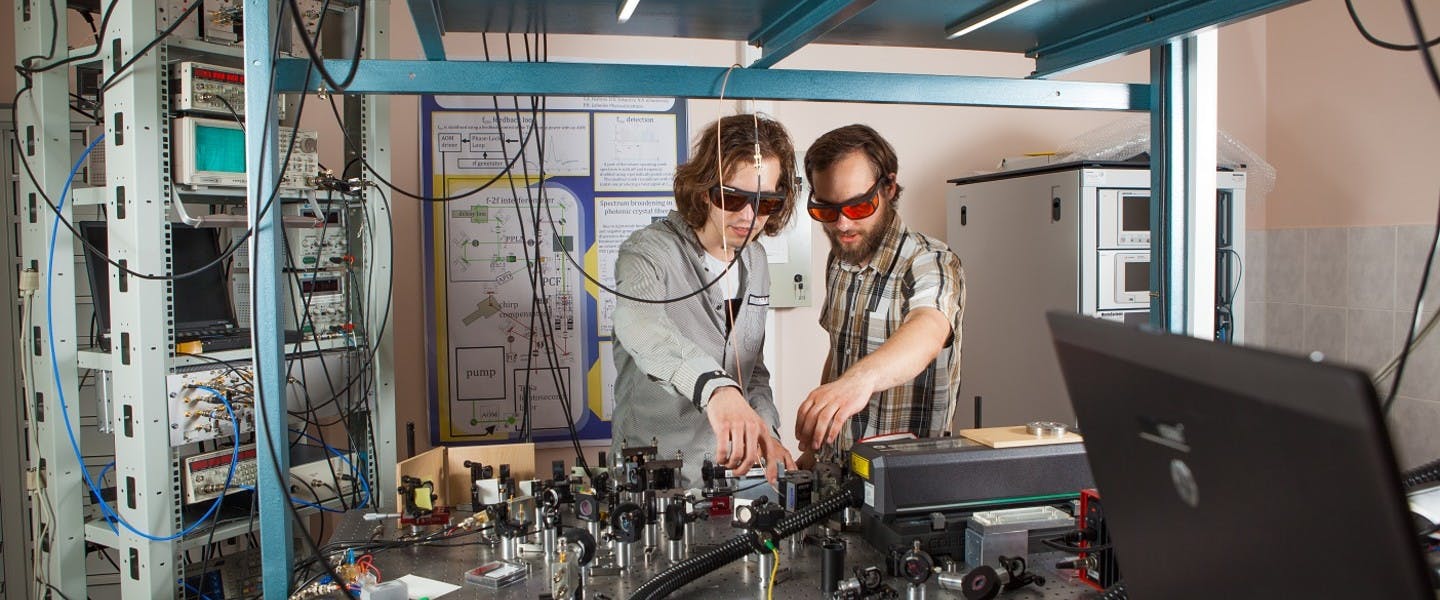
The group has world’s leading position in studies of laser cooled Thulium atoms: for the first time we demonstrated laser cooling and trapping, laser excitation of the clock transition, determined the magic wavelengths. We develop ultrastable lasers with unprecedented phase stability and cover most challenging demands of optical clocks community in Russia
The field of Precision Quantum Measurements deals with quantum sensors and optical clocks for variety of fundamental and applied research. Laser cooling and quantum manipulations with atoms and ions have variety of implementations in time and frequency metrology, global navigation systems, inertial navigation, gravimetry and quantum simulations. It opens new opportunities for sensitive tests of fundamental theories – search for variation of fundamental constants, tests of the Standard model, Lorents invariance, CPT theorem – and determination of fundamental constants. Quantum manipulations with single ions in linear ion traps is one of the proved highways to high fidelity quantum computations.
Founded in 2015, our group became the leading experimental group in Russia in the field of optical lattice clocks ion cooling and trapping. Besides fundamental studies, we develop frequency stabilized lasers with unprecedented frequency stability which are highly demanded for various precision measurements. In 2017 our group started development of transportable Yb+ ion clock which in short future should be implemented for space missions. A total of 22 publications from the group is affiliated to the RQC since 2015, including Science, Optics Express, and numerous PRA publications.
Research Areas
- 1
Optical clocks - 2
Ultrastable lasers - 3
Ions and atoms in quantum regime - 4
Hydrogen spectroscopy (collaboration with MPQ) - 5
Gravity of anti-matter (GBAR collaboration)
Members
Ksenia Khabarova Deputy Head of Research Group
Alexander Borisenko Leading Researcher
Mikhail Aksenov Senior Researcher
Dmitriy Tregubov Senior Researcher
Kristina Galstyan Junior Researcher
Denis Mishin Junior Researcher
Konstantin Kudeyarov Senior Researcher
Denis Kryuchkov Researcher
Nikita Semenin Junior Researcher
Ilya Zalivako Leading Researcher
Nikita Zhadnov Senior Researcher
Andrey Korolkov Researcher
Pavel Sidorov Junior Researcher
Daniil Provorchenko Junior Researcher
Marat Shakirov Junior Researcher
Pavel Kamenskikh Junior Researcher
Victor Belyaev Leading Engineer
History
2014 Signing agreement between the RQC and P.N. Lebedev Physical Institute for establishing of joint labs
The group starts at P.N. Lebedev Physical Institute
2015 Clock transition at 1140 nm in laser cooled cloud of Tm atoms is directly excited for the first time
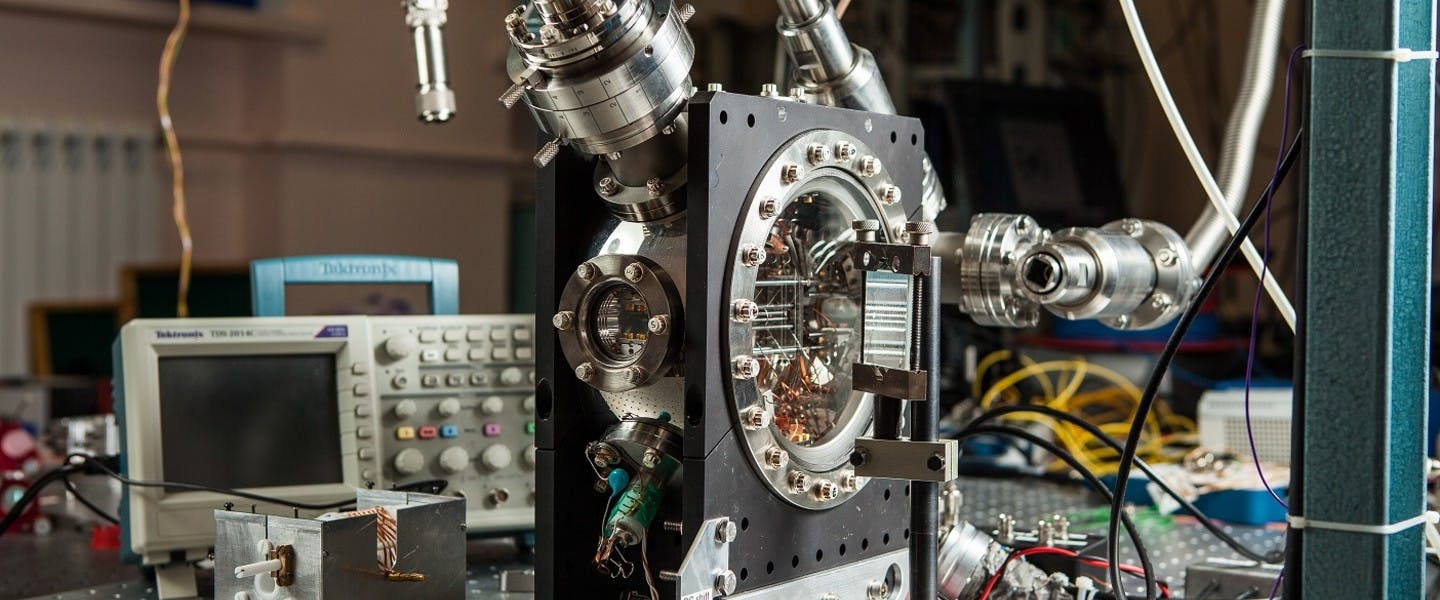
Ion trap for Mg+ and Al+ ions is assembled. First ions are detected using an electron multiplier. Multi-particle losses are studied
Infrastructural renovation started. Aim: a cluster of three full-sized optical laboratories, recreation rooms and a workshop
2016 New result of precision spectroscopy of the 1S-3S transition in atomic hydrogen using chirped laser pulses is obtained in collaboration with MPQ
Novel fiber-based anti-reflector for precision one-photon spectroscopy is reported. The Doppler effect can be cancelled to 4 parts in 10^(-6)
Cryogenic crystalline silicon cavity shows the finesse of 500000 at the critical temperature of 124 K
Calculations of Tm polarizabilities and atom-atom interactions show that the proposed optical clock can be accurate to a few parts in 10^(18)
The laboratory cluster is in full operation mode. Thulium setup is reassembled and upgraded in the new laboratory
2017 New regime of Tm MOT is studied – the interplay between Doppler and subDoppler cooling is directly observed and interpreted for the first time
Ginzburg Centennial Conference on Physics organized
Good news from Tm lab: the magic wavelength is determined at 814 nm. The clock transition linewidth shrunk to 50 Hz – important breakthrough for Tm optical clock
New value for the Rydberg constant and the proton charge radius from atomic hydrogen spectroscopy are reported. The values are consistent with muonic hydrogen. Proton charge puzzle starts to be unshaded
The Ministry of Education grant for development of on-board satellite Yb+ ion clock is won
Photos