Our website uses cookies to manage some features and to show you news and announces in selected language. By clicking on OK button, you accept the use of cookies.



Group of
Quantum Information Technologies

Evgeniy Kiktenko
Principal Investigator
Group publications

About the Group
We develop quantum algorithms and theoretical methods for their efficient implementation on existing and emerging physical platforms. The group’s research covers algorithms for proof-of-concept applications, quantum circuit transpilation methods, algorithms for characterizing quantum devices, as well as methods for error suppression and correction.
One of the group’s central goals is to understand what computational capabilities quantum devices can offer and how available hardware resources can be used most efficiently. Our research therefore spans the full path from developing algorithmic ideas to adapting them to specific architectures and experimentally validating them on quantum processors.
In the area of quantum algorithms, the group develops methods for discrete optimization, quantum machine learning, and the simulation of chemical and physical systems, while also exploring advanced algorithmic frameworks, including quantum singular value transformation (QSVT). One of the approaches under development is fixed-point quantum approximate optimization algorithm (fixed-point QAOA), which moves parameter optimization outside the quantum execution loop and allows pre-trained parameters to be reused for solving new problem instances.
A significant part of our research is devoted to multilevel quantum systems – qudits – and other alternative models of quantum computation. The group studies how additional levels of physical quantum systems can be used to reduce quantum-circuit resource requirements, develops transpilation methods for qudit processors, and explores new quantum computing architectures. In particular, together with experimental and theoretical collaborators, we investigate qudit processors based on trapped ions and polar molecules, as well as photonic computing architectures.
A separate research direction focuses on quantum error mitigation and quantum error correction. We develop both methods aimed at improving the accuracy of computations on present-day noisy quantum processors and approaches required for the transition to fault-tolerant quantum computing. Our work includes error-mitigation techniques, quantum error-correcting codes, qudit-based error-correction schemes, syndrome-decoding algorithms, and the use of high-performance classical computing for processing the results of quantum experiments. A number of these approaches are experimentally tested on operational quantum processors.
The group also studies fundamental questions in quantum information theory. In particular, we investigate quasiprobability and pseudostochastic representations of quantum processes, quantum causality and processes with nontrivial temporal structure, as well as the possibilities and limitations of classical descriptions of quantum information processes. These studies help clarify which features of quantum computation are genuinely nonclassical and which classes of quantum processes admit efficient classical descriptions.
An important feature of the group’s work is close collaboration with experimental teams. Theoretical methods and algorithms are developed with the capabilities of specific physical platforms in mind and, whenever possible, are validated experimentally. In particular, the group collaborates with teams working on trapped-ion, photonic, and superconducting quantum platforms. A substantial part of our research is carried out within the Quantum Computing Roadmap, where the group is primarily responsible for the development of quantum algorithms, characterization methods, and techniques for quantum error mitigation and correction.
Research Areas
- 1
Quantum algorithms - 2
Qudit-Based Quantum Computing and Alternative Models of Quantum Computation - 3
Quantum Error Mitigation and Quantum Error Correction - 4
Fundamental Questions of Quantum Information Theory
Members
Ilya Iakovlev Junior Researcher
Dmitry Korlyakov Junior Researcher
Maria Kolchenko Junior chemist-programmer
Daria Konina Project Manager
Ivan Maslakov Intern Researcher
Evgeniy Kiktenko Chief Researcher
Boris Bantysh Senior Researcher
Anton Bozhedarov Leading Researcher
Saldivar Julio Alberto Lopez Researcher
Anastasia Nikolaeva Senior Researcher
Ivan Dudinets Researcher
Igor Ermakov Researcher
Maxim Gavreev Developer-researcher
Denis Kulikov Junior Researcher
Anatoliy Antipov Programmer Researcher
Dmitry Tatianchenko Junior Researcher
Ilya Dmitriev Junior Researcher
Gleb Salakhov Junior Researcher
Egor Lyakhov Intern Researcher
Nadezhda Khrapai Intern Researcher
Vsevolod Yashin Junior Researcher
Anatoly Lotkov Developer-researcher
Yury Bogdanov Chief Researcher
Vladimir Mazurenko Leading Researcher
Alena Mastiukova Developer-researcher
Andrey Chernyavsky Senior Researcher
Oleg Sotnikov Junior Researcher
Ilya Kovalchuk Researcher
Denis Kurlov Researcher
Daniil Bagaev Junior Researcher
Konstantin Makushin Researcher
Alina Mardanova Junior Researcher
Polina Polyakova Intern Researcher
History
2015 Work begins on a post-processing system for quantum communications (within the Quantum Communications group)
Collaboration with the Many-Body Theory group on the study of interacting many-body systems with dipolar interactions.
2016 Participation in the first tests of a quantum communication system at Gazprombank (within the Quantum Communications group)
Evgeniy Kiktenko defends his PhD dissertation.
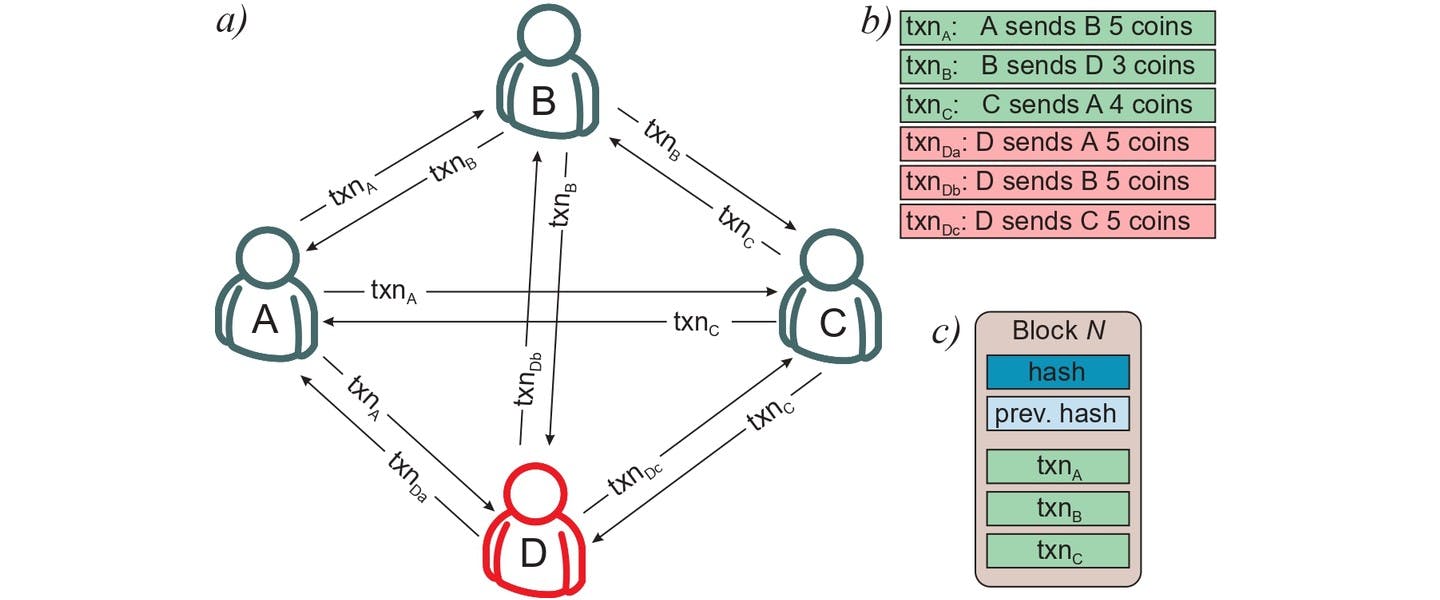
2017 World’s first experimental demonstration of a quantum-secured blockchain protocol (jointly with the Quantum Communications and Quantum Optics groups) [Quantum Sci. Technol. 3, 035004 (2018); arXiv:1705.09258].
Development of a network protocol for quantum communications begins.
Aleksey Fedorov defends his PhD thesis at Université Paris-Sud (Paris-Saclay).
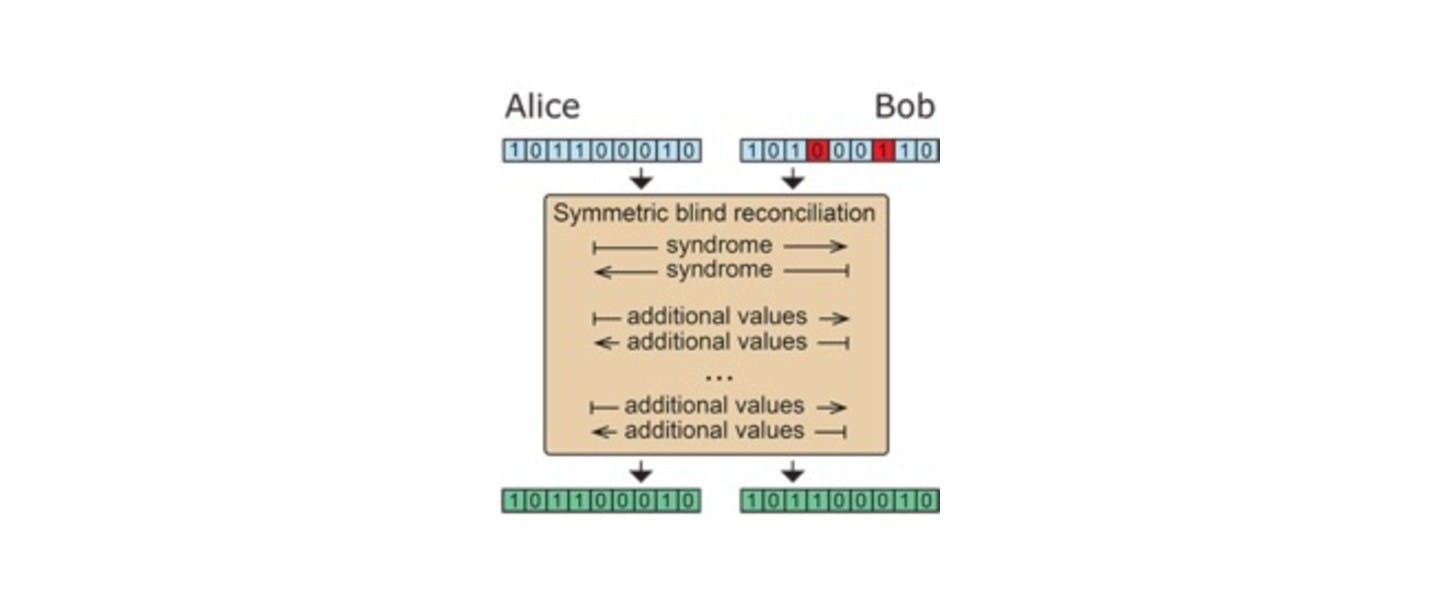
Publication of an error-correction algorithm for quantum key distribution systems with record efficiency [Phys. Rev. Applied 8, 044017 (2017); arXiv: 1612.03673]
2018 Applied research begins on post-quantum cryptographic algorithms, now being further developed by the spin-off company QApp, as well as on application software for quantum computers, now continuing within the QBoard project.
Presentation on quantum-secured algorithms research in Russia at the international ETSI conference in Beijing.
Publication of a News & Views article on the threat posed by quantum computers to blockchain technologies [Nature 563, 465 (2018)]
Participation in tests of a quantum communication system at Sberbank (jointly with the Quantum Communications group).
2019 Aleksey Fedorov becomes Head of the Quantum Information Technologies group and one of the authors of the Quantum Technologies Roadmap.
Aleksey Fedorov and Evgeniy Kiktenko become principal investigators of Russian Science Foundation projects under the Presidential Programme for young researchers.
As part of the Quantum Technologies Roadmap development, a review of the quantum technology landscape in Russia is published in a special issue of Quantum Science and Technology [Quantum Science and Technology 4, 040501 (2019)]
2020 Aleksey Fedorov leads the Quantum Computing Leading Research Center project, supported by the NTI Foundation. Over three years, the project develops a cloud platform for access to a trapped-ion quantum computer created by RQC and the P. N. Lebedev Physical Institute, as well as quantum algorithms for multilevel systems – qudits. The project is carried out by teams from RQC, the P. N. Lebedev Physical Institute, the K. A. Valiev Institute of Physics and Technology, and Skolkovo Institute of Science and Technology.
Together with the Quantum Optics group, a machine-learning-based method for quantum tomography is proposed. The approach is applied in quantum-optical experiments [Optica 7, 448 (2020)]
A post-processing system is developed for a certified quantum random-number generator using an “untrusted” light source, jointly with the Quantum Communications group and I. Walmsley’s group at Oxford University [Phys. Rev. X 10, 041048 (2020); arXiv: 1905.09665]
2022 In partnership with Nissan, the group completes Russia’s first commercial project in quantum chemistry, developing new variational algorithms for modeling materials for electric-vehicle batteries. Joint projects are also carried out with companies including Gazprombank, Bosch, Sber, VK, and others.
An optimal decomposition scheme for multi-qubit Toffoli gates using superconducting qutrits is proposed [Physical Review A 105, 032621 (2022); arXiv: 2112.14535]
An efficient quantum algorithm for chemical simulation is developed, and simulating carbon monoxide oxidation is demonstrated [Communications Physics 5, 199 (2022); arXiv: 2108.11167]
Together with the Many-Body Theory group, the emergence of a “time crystal of light” is predicted and theoretically described [Physical Review Letters 129, 250401 (2022); arXiv: 2204.07533]
2023 A scheme is proposed for implementing a class of quantum error-correcting codes using a single ancilla and a circular qubit-connectivity topology [Physical Review A 107, 032403 (2023); arXiv: 2207.13356]
Together with P. Fedichev’s group in Singapore, a hybrid quantum-classical machine-learning algorithm for molecular generation is proposed, predicting more than 2,000 new compounds with potential pharmaceutical properties [Scientific Reports 13, 8250 (2023); arXiv: 2108.11644]
A continuous quantum-processor monitoring system is developed, enabling high-accuracy estimation of processor parameters from previously executed quantum algorithms [Physical Review Applied 19, 014027 (2023); arXiv: 2205.06191]
Together with S. Straupe’s group, a scheme is proposed for analyzing experimental data obtained from boson samplers using the Hamming-distance metric [Phys. Rev. A 108, 062420 (2023); arXiv: 2305.10946]
Together with the groups of N. Kolachevsky and I. Semerikov, a scheme for protected optical 171Yb+ ion qudits is proposed and experimentally demonstrated [Frontiers in Quantum Science and Technology 2, 1228208 (2023); arXiv: 2305.06071]
Anastasia Nikolaeva defends her PhD dissertation.
2024 Quantum-algorithm execution is tested through a cloud quantum-computing platform across trapped-ion, neutral-atom, photonic, and superconducting quantum processors.
The concept of quantum-state complexity classes is proposed [Phys. Usp. 67, 906 (2024)], providing a potential tool for characterizing the computational capabilities of quantum computers.
Russia’s first cross-platform test of quantum algorithms is carried out by simulating systems with broken PT symmetry on trapped-ion and superconducting quantum processors [Physical Review A 109, 032619 (2024); arXiv: 2310.20432]
A fractal ansatz is proposed for solving many-body quantum problems [Phys. Rev. Lett. 132, 050401 (2024)], including the Schwinger model, demonstrating advantages over tensor-network approaches.
Results of a satellite quantum key distribution experiment between Russia and China, accounting for detector-efficiency mismatch, are published [Optics Express 32, 11964 (2024); arXiv: 2310.17476]
2025 The advantages of qudits for implementing the Toffoli gate, a key building block of quantum algorithms, are experimentally demonstrated jointly with the Precision Quantum Measurements group and the P. N. Lebedev Physical Institute [Physical Review Letters 135, 060601 (2025); arXiv: 2407.07758]
A comprehensive review of qudit-based quantum computing is published in Reviews of Modern Physics [Review of Modern Physics 97, 021003 (2025); arXiv: 2311.12003]
2026 Aleksey Fedorov becomes CEO of the Russian Quantum Center, and Evgeniy Kiktenko becomes Junior Principal Investigator of the group.
Maksim Gavreev and Alena Mastiukova defend their PhD dissertations.
It is shown that, for fixed-point QAOA, the number of quantum-circuit executions required to obtain an approximate solution of a given quality can remain approximately constant as the problem size increases [Physical Review A 114, 032405 (2026); arXiv: 2509.19035].
Photos